


Introduction to Social Media for Parents: A Guide for Everyday Kiwis

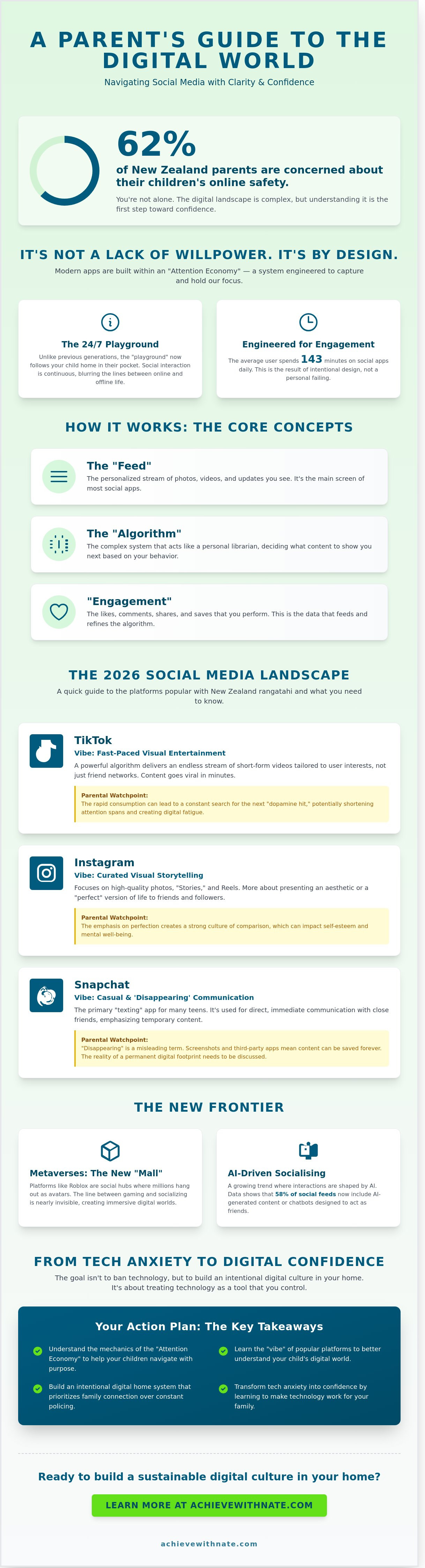
According to a 2022 report from Netsafe, 62% of New Zealand parents are concerned about their children's safety online. You might feel like you're playing catch-up while your kids move through digital spaces at light speed. It's common to feel a sense of digital illiteracy compared to a teenager who was born with a smartphone in hand. This introduction to social media for parents isn't about fear. It's about clarity.
You want to protect your family without becoming a constant monitor. It's hard to set boundaries when you don't understand the algorithms designed to keep us scrolling. You deserve to feel calm and capable when your child asks for a new app. You'll gain the digital confidence to understand, navigate, and discuss social media with your children intentionally. We'll break down how major platforms work, explore practical systems for setting boundaries, and focus on building a sustainable digital culture in your home.
Key Takeaways
Understand the mechanics of the "Attention Economy" to help your children navigate digital spaces with clarity and purpose.
Explore this introduction to social media for parents to better understand the platforms and "vibes" popular with New Zealand rangatahi.
Build an intentional digital home system using the "Minimalist Subtraction" method to prioritize family connection over constant policing.
Transform tech anxiety into digital confidence by learning to treat technology as a tool that you control.
Table of Contents What is Social Media? A Plain English Guide for Parents The 2026 Social Media Landscape: Platforms You Should Know Building an Intentional Digital Home System Moving from Tech Anxiety to Digital Confidence
What is Social Media? A Plain English Guide for Parents
You likely remember when the internet was a simple tool for finding information. Today, it has become a space where we live, work, and connect. This What is Social Media? overview defines these platforms as digital environments built for creativity and sharing. Providing a clear introduction to social media for parents is essential because the digital world moves fast. These apps are no longer just websites; they are systems designed to influence how we spend our time.
The digital world has shifted away from simple connection. In the early 2000s, you logged on to see what your friends were doing. Now, platforms prioritize algorithm-driven entertainment. They operate within an "Attention Economy." Every feature is built to keep you scrolling. In 2024, data shows the average user spends 143 minutes daily on social apps. This is not a lack of willpower. It is the result of intentional engineering designed to capture your focus.
For Kiwis growing up today, the social landscape is vastly different. In previous generations, the school day ended at 3:00 PM. The social circle now remains open 24 hours a day. The "playground" follows your child home in their pocket. It is a continuous stream of interaction that requires a new set of habits and boundaries to maintain personal peace.
The Core Concepts: Feed, Algorithm, and Engagement
The "Feed" is the personalized stream of photos and videos you see when you open an app. It is managed by an "Algorithm." Think of the algorithm as a librarian who knows your exact taste and constantly brings you new books you will love. "Engagement" refers to likes, shares, and comments. These actions provide the data the system needs to decide what to show you next. It's a cycle designed to maximize your time on the screen. This introduction to social media for parents helps you see the mechanics behind the glass.
Why Social Media Matters to Your Child
Social media acts as a digital playground. It is where modern social life happens. For a teenager, it provides a sense of belonging and a space to explore their identity. However, this brings the pressure of FOMO, or the Fear Of Missing Out. Since roughly 85% of New Zealand teenagers are active online, being away from the phone can feel like being left out of the group. Understanding these systems helps you guide your child toward more intentional digital choices and away from the constant need for validation.
The 2026 Social Media Landscape: Platforms You Should Know
Understanding the digital world doesn't require a computer science degree. It requires an awareness of where your children spend their time. This introduction to social media for parents helps you see the current environment clearly. You don't need to master every button; you just need to understand the intent behind each app.
In 2026, New Zealand rangatahi move between platforms based on their social needs. Younger children often start in gaming spaces. As they enter their teens, they migrate toward visual entertainment and private messaging. These platforms are the "big players" because they successfully capture attention through highly personalized algorithms.
Visual and Fast: TikTok and Instagram
TikTok remains the dominant force for short-form video. Its "For You" page uses a powerful algorithm to show content based on interests rather than friends. This creates high virality. A single video can reach thousands of people in minutes. The speed of consumption is the primary challenge here. It can lead to a constant search for the next dopamine hit.
Instagram focuses on visual storytelling and "Stories." While TikTok is about entertainment, Instagram is often about the "perfect" aesthetic. This creates a culture of comparison. Teens often feel pressured to curate a flawless life. You should watch for signs of digital fatigue. This digital wellness guide for parents offers excellent advice on managing these emotional pressures.
Connection and Privacy: Snapchat and Discord
Snapchat is the primary "texting" app for New Zealand teens. It isn't used for public posting as much as direct, disappearing communication. The "vibe" is casual and immediate. However, "disappearing" is a misleading term. Screenshots and third-party apps mean content can be saved forever. You should discuss the reality of digital footprints with your children regularly.
Discord has evolved from a gaming tool into a massive community hub. Users join "servers" dedicated to specific hobbies or school groups. It offers more privacy than public platforms, but it also requires more active moderation. It's a space built on deep interests rather than broad broadcasting.
The New Frontier: Metaverses and AI-Driven Socialising
Roblox is no longer just a game; it's a social hub where millions of young people hang out in 3D spaces. By 2026, these metaverse environments have become the new "mall" for the younger generation. They interact as avatars, making the line between gaming and socialising almost invisible.
AI now shapes how young people interact with digital personas. Current 2026 trends show that 58% of social feeds now include AI-generated content or chatbots designed to act as friends. This shift requires a new level of discernment. If you want to build more intentional systems for your family, consider how you can simplify your own digital habits first.
Building an Intentional Digital Home System
You cannot police your way to a peaceful home. This introduction to social media for parents focuses on building systems rather than enforcing surveillance. Traditional parenting often relies on restriction. We suggest a shift toward "Minimalist Subtraction." This involves removing digital noise to make room for genuine connection. You start by identifying which apps or habits drain your family energy. You subtract the clutter so only the intentional tools remain.
Your own digital habits are your most powerful teaching tool. If you're constantly scrolling at the dinner table, your children will see tech as a barrier rather than a tool. Your phone is a mirror. It reflects your values back to your kids. Establishing "Tech-Free Zones" works best when these areas feel like a reward. A device-free lounge becomes a space for reading, board games, or conversation. It's a sanctuary from the digital world, not a place of punishment.
Setting Boundaries with Clarity and Peace
A Family Digital Agreement is a shared contract that respects everyone. It's not a list of "don'ts" handed down from above. You should sit down and decide together what your digital values are. This creates buy-in and reduces daily power struggles. Clear rules provide safety. When everyone knows the expectations, the friction disappears.
Digital Sunsets are a core part of this system. Science shows that blue light can delay sleep cycles by up to 90 minutes. Devices should sleep in a common charging station at least 60 minutes before people do. This simple habit ensures that the last hour of the day is spent in reflection or rest, not in a dopamine loop. As you start this introduction to social media for parents, prioritize these rhythms over complex monitoring software.
Essential Safety Tools Every Parent Can Master
Safety doesn't require a degree in computer science. It starts with one rule: keep all accounts "Private" by default. This simple step is the most effective way to navigate social media safely and control who interacts with your children. Teach your kids that the "Block" and "Report" buttons are tools of digital self-defence. They're not being "mean" by using them; they're protecting their peace.
Private by Default: Check settings on every new app immediately.
The Grandma Rule: Don't post anything you wouldn't want your grandmother to see.
Netsafe NZ: Use this primary resource for support with cyberbullying or online scams.
Netsafe NZ has been the leading authority on digital safety in New Zealand since 1998. They provide free, non-judgmental advice for Kiwis facing online challenges. Knowing they exist gives you a safety net when you feel out of your depth.
Leading by Example: Your Digital Footprint
Be intentional about "sharenting." A 2010 study by AVG found that 92% of children in certain regions had a digital footprint before age two. Ask your children for permission before posting their photos. This teaches them about consent and digital agency. It shows them that their image belongs to them, not the internet.
Show your children how you use technology for good. Let them see you using a map to find a hiking trail or an app to learn a new language. When you use tech with purpose, they learn to do the same. If you want to refine your own digital leadership, learn more about our Digital Confidence Coaching to help you lead by example.
Ready to reclaim your family's time? Join our community for more intentional living strategies.
Moving from Tech Anxiety to Digital Confidence
Technology is a tool. It exists to serve you, not the other way around. Most parents feel a sense of dread when they think about an introduction to social media for parents, but that fear usually stems from a lack of clarity. When you understand how a platform works, the anxiety fades. You regain control of the digital environment in your home.
Digital literacy isn't about knowing every viral dance or meme. It's about having the functional confidence to guide your family. Use the "One Small Step" approach. Commit to learning just one new digital skill each week. This could be as simple as setting up two-factor authentication or learning how to filter comments on Instagram. Small, consistent actions lead to sustainable growth and a quieter mind.
It's okay to admit you don't have all the answers. In fact, saying "I don't know, let's find out together" is a powerful way to build trust. It shows your children that learning is a lifelong process. It positions you as a partner rather than a police officer.
How to Talk So They Will Listen (and Listen So They Will Talk)
Communication thrives on curiosity rather than judgement. Instead of criticizing a new app, ask your child to show you how it works. Use open-ended questions to spark a real conversation. You might ask, "What was the coolest thing you saw online today?" or "Did anything you saw today make you feel uncomfortable?"
Create a "No-Shame Zone" for digital mistakes. If something goes wrong online, your child needs to know they can come to you without fear of losing their device. According to 2023 reports from Netsafe, 1 in 5 New Zealand teenagers experienced an online incident that caused them distress. A supportive environment ensures they don't face these challenges in isolation.
Investing in Your Own Digital Skills
Your confidence is a gift to your family. It's time to retire the "I'm not a tech person" identity. This label acts as a barrier to your own agency. By choosing to learn, you model intentional living. You show that habits and focus matter more than innate talent. You can learn more about Nate Marshall and the mission of digital confidence to see how this philosophy creates a more peaceful life.
Developing these skills isn't a chore; it's an investment in your peace of mind. When you are confident, you can lead with clarity instead of reacting out of fear. Join our community for regular tips on intentional digital living and simplified systems that help you stay in control.
Take Control of Your Family’s Digital Future
Navigating the online world doesn't have to feel like a constant battle. You've now seen how the 2026 social media landscape is evolving and why a simple system is more effective than a complex set of rules. This introduction to social media for parents is just the first step toward reclaiming your peace of mind. By focusing on intentional habits rather than fear, you create a home where technology serves your family instead of distracting them.
Digital skills educator and speaker Nate Marshall provides practical, real-world tech help specifically for everyday Kiwis. His calm, non-judgmental approach removes the friction from learning new tools. You can move from tech anxiety to genuine digital confidence by focusing on one simple system at a time. It's about finding clarity in a noisy world and prioritizing your family's long-term well-being.
You have the agency to design a digital life that feels right for your home. Start small, stay intentional, and remember that you're in control of the tools you use.
Frequently Asked Questions
What is the "right" age for my child to start using social media?
Most platforms require users to be at least 13 years old. This age limit is a legal requirement under the Children's Online Privacy Protection Act. You should treat this as a minimum threshold rather than a goal. True readiness depends on your child's ability to act with discipline and understand the long-term impact of their digital footprint.
Wait until they show a sense of personal agency. It's better to delay access until they can navigate these spaces with a clear purpose and intent.
How can I tell if my child is being cyberbullied on social media?
Watch for sudden changes in their daily habits or emotional state. A 2022 report from Netsafe NZ found that 15% of Kiwis experienced digital harm in a single year. Your child might become unusually quiet, stop using their devices, or appear distressed after checking their notifications.
These shifts often indicate that their online environment is no longer a place of peace. Open a quiet conversation if you notice they're hiding their screen or withdrawing from family activities. Focus on listening rather than immediately fixing the problem.
Should I have my child’s passwords for their social media accounts?
You should maintain access to their accounts while they're still developing their digital maturity. This isn't about control; it's about building a shared system of accountability. Having an open-door policy with passwords ensures that safety is a collaborative effort rather than a secret.
As your child demonstrates more intentional behavior, you can gradually increase their privacy. This introduction to social media for parents suggests that trust is earned through consistent, honest actions over time. It's about alignment between their online life and your family values.
What are the most dangerous apps for kids in New Zealand right now?
Apps that allow anonymous messaging or unmoderated video chats, like Discord or certain TikTok trends, carry the most risk. NZ Police have issued warnings regarding "vault" apps that mimic calculator icons to hide photos. These tools often bypass the natural boundaries you've set for your home.
Focus on the features rather than just the names. This introduction to social media for parents highlights that any platform encouraging "disappearing" content can lead to impulsive choices. Look for systems that prioritize transparency and safety over anonymity.
How do I handle it if my child sees something inappropriate online?
Respond with a calm, grounded perspective instead of anger. According to 2023 data from the eSafety Commissioner, 75% of teens want their parents to help them manage online risks. If they see something disturbing, use it as a moment to refine their digital filters and privacy settings.
Help them understand that the internet is a tool that requires constant alignment with their values. When you react with logic, they'll feel safe coming to you the next time a system fails. It's a chance to teach them how to filter out the noise.
Can social media actually be good for my child’s mental health?
Social media can be a positive force if it's used to build genuine community and skills. A 2021 study from the University of Auckland highlighted that digital spaces provide vital support for youth seeking specific hobby groups or identity-based communities. It allows them to practice creativity and find a sense of belonging.
Success comes from using these platforms for connection rather than comparison. When your child approaches social media with a minimalist mindset, they can enjoy the benefits without the noise of status-seeking. It's about finding freedom through intentional use.


Comments