


How to Use Ngā Mihi: A Simple Guide for Digital Communication

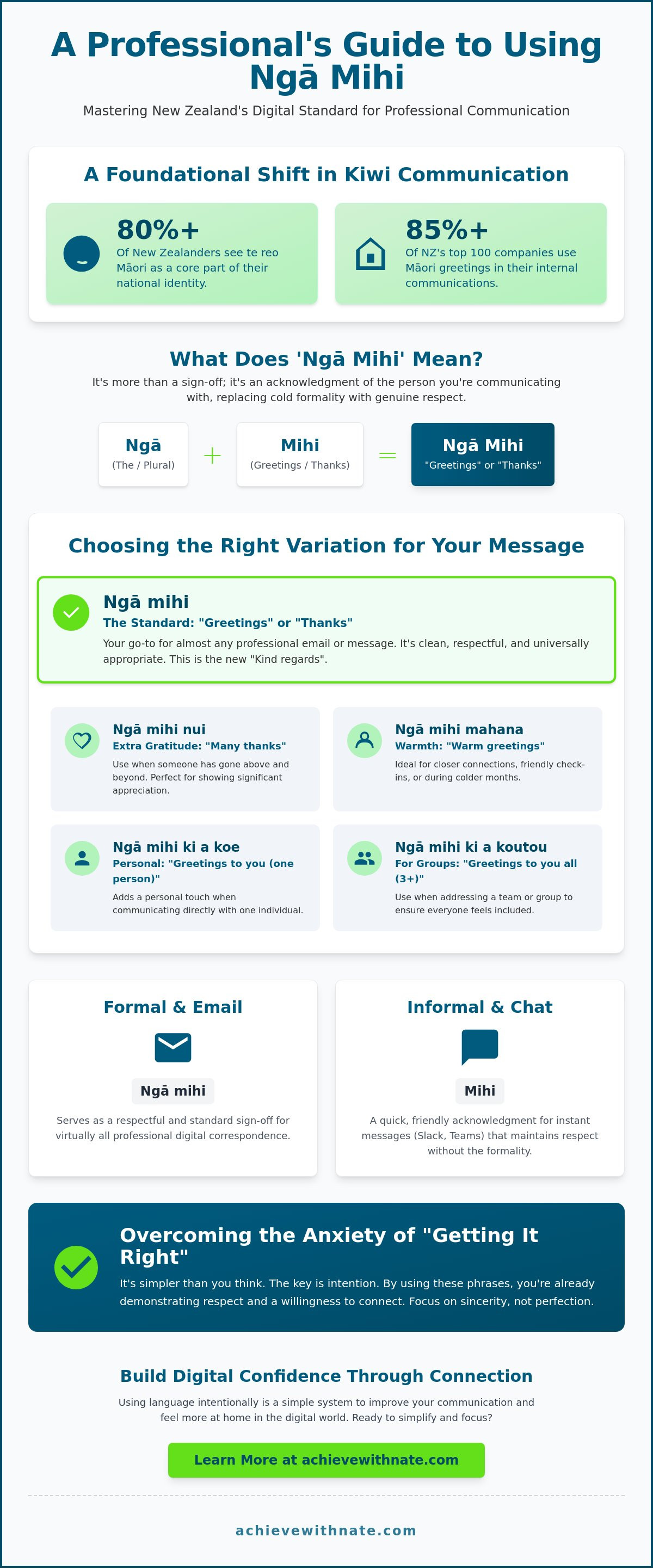
Using nga mihi in your professional life is no longer just a nice gesture; it is a fundamental part of modern New Zealand communication. Yet, many professionals hesitate before typing it because they want to be respectful rather than performative. According to research from the Māori Language Commission, over 80% of New Zealanders now see the language as a core part of our national identity. This shift means that integrating these phrases into your daily systems is a practical way to show you are present and engaged with modern culture.
You likely want your digital sign-offs to feel both authentic and intentional. It is natural to feel a bit out of the loop or worried about using a phrase in the wrong context. You don't want to overcomplicate your communication, but you do want to get it right. I promise that using these phrases correctly is simpler than you think. This guide will give you the confidence to use these terms in your messages without the fear of making a mistake.
We are going to look at the specific meanings behind common sign-offs and provide a clear list of phrases you can copy and use immediately. You will gain the clarity needed to make your digital communication more meaningful and aligned with current standards.
Key Takeaways
Understand why nga mihi is the most common professional sign-off in New Zealand digital spaces.
Learn to choose the right variation for your audience to keep your messages intentional and clear.
Discover how to place these phrases to create a simple and effective email system.
Overcome the anxiety of cultural appropriation by focusing on respect and sincere connection.
Build digital confidence by using language as a tool to feel more at home in the online world.
Table of Contents What does ngā mihi mean in a digital context? How to use ngā mihi in your emails and messages Overcoming the anxiety of "getting it right" Building digital confidence through cultural connection
What does ngā mihi mean in a digital context?
Ngā mihi translates literally to "the greetings," "thanks," or "acknowledgments." In 2026, it stands as the most common professional sign-off in New Zealand digital communication. This is not a temporary trend. It represents a fundamental shift toward more intentional and inclusive language in our daily lives. When you use nga mihi, you acknowledge the person you are communicating with, not just the task at hand.
This phrase creates a moment of clarity in a busy inbox. It moves away from the cold, transactional nature of traditional business English. By choosing these words, you are practicing a form of digital minimalism. You are removing unnecessary formality and replacing it with genuine respect. It is a simple system that improves the quality of every interaction you have online.
In a world of constant notifications, your choice of words matters. A standard sign-off can often feel like digital clutter. However, an intentional phrase like this provides a sense of peace. It simplifies your workflow while maintaining high standards of etiquette. You aren't just ending an email; you are closing a loop with respect and focus.
The origin and spirit of the phrase
The root word "mihi" serves as a greeting, tribute, or acknowledgment. It is a powerful word in te reo Māori that carries weight and history. When you add "ngā" to the start, the acknowledgment becomes plural and encompassing. It expands the reach of your gratitude. Ngā mihi is a versatile acknowledgment of others that fits almost any digital interaction, from a quick Slack message to a formal report.
Why it has become a digital standard in Aotearoa
The normalization of te reo Māori in government and corporate New Zealand has changed how we write. Data from 2024 indicates that over 85% of New Zealand's top 100 companies now include Māori greetings in their internal communication systems. This shift bridges the gap between formal and friendly tones. It allows you to be professional without being distant or robotic.
Using nga mihi helps foster a unique New Zealand digital identity. It signals that you are grounded in the culture and values of Aotearoa. This practice creates alignment between your communication habits and a more sustainable, inclusive way of working. It is a small but significant action that supports the long-term health of our local language and professional culture.
How to use ngā mihi in your emails and messages
Using nga mihi in your daily workflow is a simple way to practice intentionality. Place the phrase at the end of your message, just before your name. You don't need to over-explain why you're using it. Let the words speak for themselves. Consistency is key. When you use it daily, it stops being a conscious effort and becomes a natural part of your digital voice.
Common variations for every situation
Choosing the right variation depends on the warmth you want to convey. While the standard version is versatile, these options allow for more specific connection:
Ngā mihi: The standard, versatile version for any email or message. It's clean and professional.
Ngā mihi nui: This translates to "many thanks" or "big thanks." Use it when you want to show extra gratitude or warmth.
Ngā mihi mahana: "Warm greetings." This is perfect for closer connections or during the colder winter months in New Zealand.
Ngā mihi ki a koe: This specifically acknowledges one person. It adds a personal touch to a one-on-one email.
Formal vs. Informal digital sign-offs
In New Zealand business, nga mihi is almost always appropriate. It's a respectful choice that has largely replaced "Kind regards" or "Yours sincerely" in many corporate and government environments. For quick instant messages or texts, you can use "Mihi." This shorter version keeps the pace of the conversation without losing the sentiment of respect. It's a functional way to stay grounded in your communication without adding unnecessary fluff.
Addressing groups and teams
When you're messaging a team of three or more people, use "Ngā mihi ki a koutou." This ensures everyone in the group feels seen and acknowledged. "Ngā mihi o te wā" is another useful phrase. It means "greetings of the season" or "greetings for the time." Using these variations supports your digital wellbeing by making digital interactions feel more human and less transactional.
If you're ready to simplify your life and focus on what matters, you can learn more about my philosophy on the about page.
Overcoming the anxiety of "getting it right"
Many Kiwis feel a sense of hesitation when they first type nga mihi. You might worry about overstepping or misusing a culture that isn't your own. This fear is common. It usually comes from a place of genuine respect. However, staying silent doesn't help te reo Māori thrive. It's better to engage with sincerity than to avoid the language out of fear.
Intentionality is your best tool for respectful communication. When you use these words, do it with a clear purpose. Focus on the manaakitanga you want to extend. This concept is about hospitality and kindness. It's about how you make the recipient feel. Mistakes are a natural part of the learning process. Most people value the effort and the connection you are trying to build more than perfect execution.
Is it okay for non-Māori to use ngā mihi?
The short answer is yes. There's a clear distinction between cultural appropriation and appreciation. Appropriation takes without respect or understanding. Appreciation learns and shares to keep te reo Māori a living, breathing language. By using nga mihi in your daily emails, you help normalize the language in professional spaces.
Start simple with greetings and sign-offs.
Don't feel pressured to use complex phrases immediately.
Grow your vocabulary at a pace that feels sustainable.
Practising digital mindfulness with your words
Digital communication often feels rushed. We feel a constant pressure to respond instantly. Slowing down to choose your words carefully changes your internal state. When you take the time to type a thoughtful closing, you move away from reactive habits. This intentionality helps you manage notifications with less urgency and more focus.
Cultural literacy builds overall digital confidence. When you understand the weight of your words, you communicate with more clarity. Your language choice serves as a mirror for your digital presence, signaling whether you are operating from a place of distraction or discipline. It shows you're present in the conversation. This alignment between your actions and your values leads to a more peaceful digital life.
If you want to build more intentional systems in your life and work, explore my coaching services.
Building digital confidence through cultural connection
Digital confidence is a quiet feeling of competence. It's the sense that you belong in the online world rather than just visiting it. Learning to use nga mihi is a powerful way to claim your space. These small phrases act as anchors. They make technology feel less like a cold barrier and more like a tool for genuine human connection. When your digital actions align with your cultural values, the friction of using tech starts to disappear.
Achieve With Nate helps you bridge these gaps through practical, grounded coaching. We look at how you use your devices and find ways to make them serve you. It's about subtraction, not addition. You don't need more apps; you need better systems. You can take the next step by exploring how digital coaching can simplify your life and give you back your time. It's a realistic way to move from feeling overwhelmed to feeling in control.
Why small steps lead to big changes
Mastering a simple email sign-off builds the momentum you need for harder tech tasks. It's a low-risk entry point that yields immediate results. When you get comfortable with nga mihi, you realize that digital communication is just another habit you can refine. This reflects the philosophy of minimalism in language. You're using fewer words, but those words carry more weight and intention. It's about quality over quantity. Using a consistent, meaningful sign-off also reduces decision fatigue. If you're looking for more ways to streamline your digital habits, check out the Achieve With Nate services for direct support.
Join a community of intentional Kiwis
You have the agency to design your digital life. It doesn't have to be a source of constant noise or distraction. I encourage you to join the community for regular digital tips that prioritize peace and productivity. This is a space for New Zealanders who value clarity and intentional living. We focus on systems that work for the long term. If you feel ready to move faster, you can fill out an expression of interest for personal coaching. Let's work together to build a digital environment that supports your focus without the unnecessary stress.
Take the Next Step Toward Digital Clarity
Integrating new phrases into your digital life is an intentional choice that builds stronger connections. Stats NZ reported in 2021 that approximately 30% of New Zealanders can speak more than a few words or phrases in the indigenous language. You now understand that nga mihi serves as a versatile tool for gratitude and acknowledgement in your emails. By focusing on simple, consistent actions, you can replace communication anxiety with a sense of calm and purpose. This shift isn't about perfection; it's about alignment with local culture. Digital tools should serve your lifestyle, not complicate it.
I offer digital confidence coaching for everyday Kiwis who want to navigate the online world with ease. My work provides national NZ support through calm, intentional guidance tailored to your specific needs. We focus on building sustainable habits that remove friction from your daily tasks. You deserve to feel capable and grounded every time you hit send. Let's work together to simplify your systems and reclaim your peace of mind.
You have the tools to communicate with integrity and heart. Start with one small change today and watch your confidence grow.
Frequently Asked Questions
What is the difference between ngā mihi and ngā mihi nui?
Ngā mihi translates to thanks or acknowledgments, while ngā mihi nui means many thanks or great acknowledgments. You use the latter when you want to show more gratitude or warmth. It's a simple way to add depth to your sign-off without adding clutter. This practice aligns your communication with a more intentional way of living.
Can I use ngā mihi at the start of an email?
You can use ngā mihi at the start of an email, but it's most common as a closing. Using it as a greeting acknowledges the recipient immediately and sets a respectful tone. It's a clear way to show you value the relationship. This choice simplifies your digital interactions by using established and meaningful patterns.
Is it disrespectful if I do not use macrons in ngā mihi?
Leaving out macrons is often seen as disrespectful because they change the word's pronunciation and meaning. The macron over the letter a in ngā indicates a long vowel sound. Using it correctly shows you've put effort into the details. This precision is a core part of building a disciplined and respectful communication system.
Should I use ngā mihi if the person I am emailing is not Māori?
You should use nga mihi even if the recipient isn't Māori. It's a standard practice in New Zealand that fosters cultural connection. Data from 2023 shows that most government departments and large firms now use Te Reo Māori as a default. It's a small step toward a more inclusive and sustainable professional environment.
How do I pronounce ngā mihi correctly in my head while typing?
Pronounce ngā by making a soft ng sound like the end of the word sing, followed by a long ah sound. Mihi sounds like me-he with short and clipped vowels. Thinking of the sounds helps you stay focused while you work. This mental habit turns a simple task into a moment of clarity and respect.
What are some other common Māori phrases I can use in emails?
You can use Kia ora for a greeting or Mōrena for a specific good morning. Kia pai tō rā is a great way to say have a good day. These phrases help you build a system of positive and intentional communication. They're effective tools for creating a peaceful and professional digital space in your daily life.


Bài viết này ngắn gọn mà dễ hiểu thật, mình đọc liền một lượt là nắm được ý, cảm ơn bạn đã chia sẻ. Mình cũng có thói quen xem thống kê XSMB hằng ngày, nhưng hồi trước cứ phải mở nhiều chỗ khác nhau để đối chiếu nên mất kha khá thời gian. Về sau mình tự gom lại cho tiện, lúc cần chỉ việc mở ra xem nhanh, đỡ phải ngồi lục từng nơi. Mình để chung mọi thứ trên một trang ở soicau247.com để theo dõi cho gọn, nhất là những hôm bận không rảnh tra cứu. Ai cũng hay cập nhật số liệu theo ngày như mình thì có thể xem ở đây: https://soicau247.com/xo-so-vinh-long-xsvl.html.