


Online Safety NZ: A Practical Guide to Digital Confidence in 2026

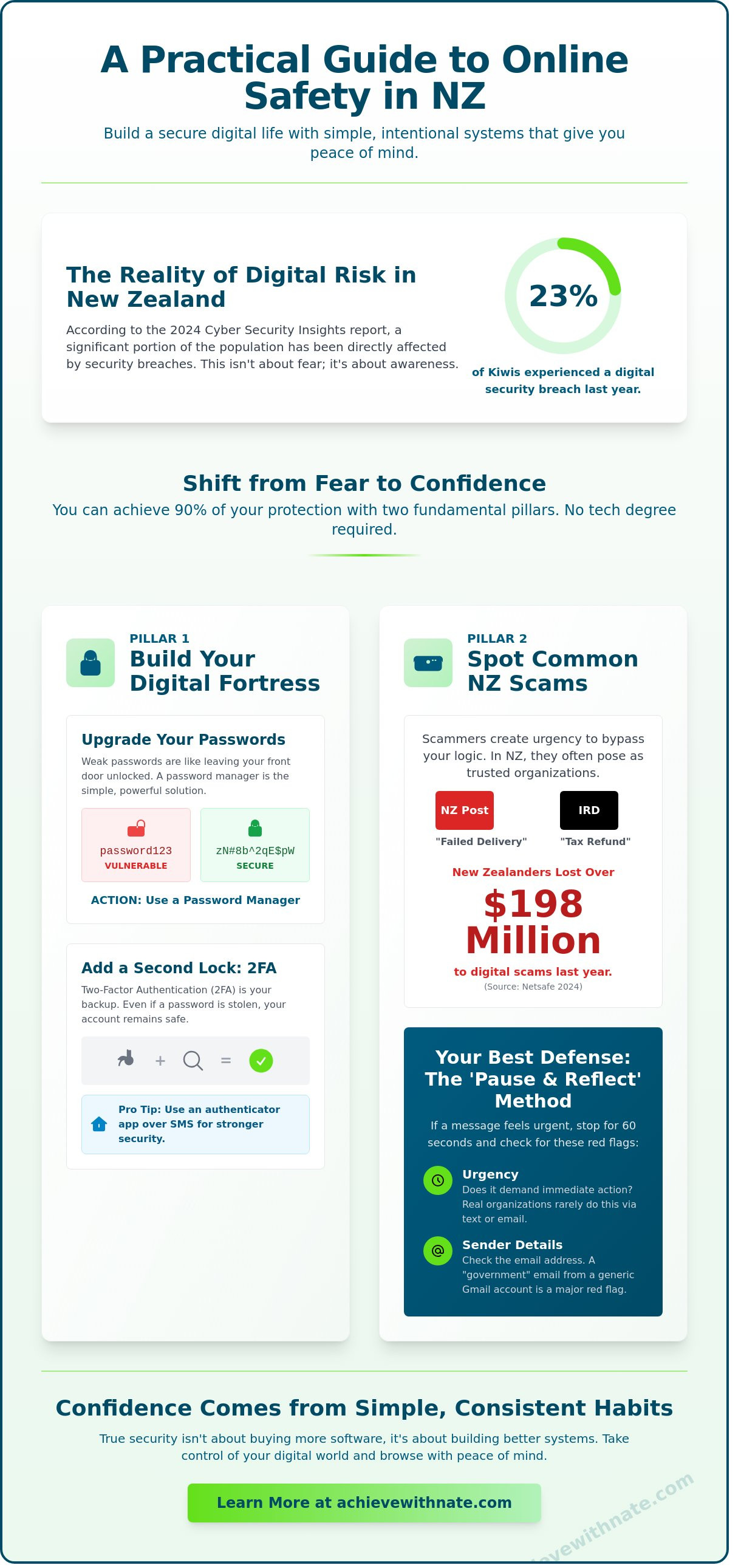
What if the most effective way to protect yourself online isn't a complex firewall, but a simple shift in how you use your devices? You likely feel the weight of constant security updates and the growing threat of sophisticated scams. According to the 2024 Cyber Security Insights report, 23% of New Zealanders experienced a digital security breach in the last year. This reality often creates a sense of anxiety every time you log on. It's exhausting to keep up with every new tech term that appears in the news.
You deserve to browse the internet with clarity and peace of mind. This practical guide to online safety nz will show you how to build a secure digital life using intentional systems that don't require a computer science degree. We will move past the jargon to focus on simple habits that work. You will learn how to streamline your passwords, lock down your social media privacy, and gain the confidence to use new digital tools without fear. Let's build a sustainable approach to your digital world that focuses on freedom rather than friction.
Key Takeaways
Shift your mindset from fear to intentionality by viewing the digital world as a tool for your growth.
Implement three simple pillars of security to create a stable digital home without the technical overwhelm.
Learn how practical online safety nz habits provide the agency you need to protect your privacy and digital wellbeing.
Move beyond basic security to build lasting digital confidence that supports your long-term peace of mind.
Table of Contents Navigating Online Safety in NZ with Intentionality Simple Systems for Your Digital Security Protecting Your Privacy and Digital Wellbeing Building Your Digital Confidence for the Long Term
Navigating Online Safety in NZ with Intentionality
The digital world is a tool for your personal growth. It is not a constant threat to your peace. Many people feel stuck because security advice often relies on fear. This fear leads to digital paralysis. You stop exploring because you are afraid of making a mistake.
There is a significant difference between being safe and being digitally confident. Safety is often a passive state where you hope nothing goes wrong. Confidence is an intentional choice. It comes from building simple systems that work for you. In 2026, mastering online safety nz is about focus rather than complexity.
You can achieve 90% of your protection through a few basic habits. You don't need to be a technical expert to protect your digital life. You only need to be consistent with the fundamentals. This approach allows you to focus on the benefits of technology without the constant anxiety of risk.
Shifting from Fear to Awareness
Most risks online are avoidable. They don't require advanced software to stop. They require a shift in your mindset. According to Netsafe data from 2024, New Zealanders lost over $198 million to digital scams. Most of these attempts were low-effort. They rely on a lack of attention rather than high-tech hacking.
Intentionality is your best defense. When you understand the logic behind a threat, the fear disappears. You can review a comprehensive overview of online safety to see that most threats follow a few predictable patterns. Awareness allows you to move through the digital world with clarity and ease. You become a harder target by simply being present.
Why Online Safety Feels Overwhelming
Technical jargon makes security feel like a burden. Words like encryption or firewalls can feel like a foreign language. This creates a barrier to entry. It's normal to feel overwhelmed by the rapid changes in technology we've seen leading into 2026. Tech moves fast, and it's okay to feel like you're playing catch-up.
The disciplined minimalist approach is different. You don't need to understand every technical detail. You only need to manage your personal systems. Success comes from subtraction. You should remove unnecessary apps and simplify your digital footprint. By doing less, you create a more secure environment. This approach provides the freedom to use the internet without the weight of constant worry.
Simple Systems for Your Digital Security
Digital security often feels like a heavy burden. You might think it requires complex technical knowledge or expensive software. It doesn't. Effective online safety nz is built on intentional systems that work quietly in the background. By focusing on three core pillars, you can create a secure digital home that protects your peace of mind without adding clutter to your life.
Security is a byproduct of consistent habits. In 2024, CERT NZ reported that unauthorized access accounted for 24 percent of all reported incidents. By 2026, this number remains high because people prioritize convenience over systems. You can choose a different path. When you set up these systems once, you subtract the daily anxiety of "what if" from your digital experience.
The Power of Strong Passwords and 2FA
Using '123456' or 'password' is the digital equivalent of leaving your front door wide open while you are away. It invites trouble. A password manager is the simplest way to solve this. These tools generate and store complex codes for every site you use. You only need to remember one master key. This single action removes the mental fatigue of memorization.
Two-Factor Authentication (2FA) is your second line of defence. It acts as a deadbolt on your digital door. Even if someone steals your password, they cannot enter without the second code from your phone. Use an authenticator app rather than SMS codes for better security. This small layer of friction provides a massive increase in your personal freedom and safety.
Identifying Common NZ Scams in 2026
Scams have become more personalized and convincing. In 2026, you will likely see text messages or emails that appear to be from NZ Post or the IRD. These messages often claim there is a "failed delivery" or an "unclaimed tax refund" to create a sense of urgency. This urgency is a red flag. Real organizations rarely demand immediate action through a link in a text message.
Phishing is a psychological trick rather than a technical hack. It relies on your emotions, like fear or excitement, to bypass your logic. To stay safe, use the 'Pause and Reflect' method. If a request feels urgent, stop for 60 seconds. Check the sender's email address closely. Often, a "government" email will come from a generic Gmail or Outlook account. You can find more specific examples of these patterns through Netsafe New Zealand's online safety resources.
Building these systems allows you to focus on what truly matters. If you want to refine your personal systems further, you might find clarity in my approach to intentional living and digital discipline. True security is found in simplicity.
Protecting Your Privacy and Digital Wellbeing
Privacy is about agency. It is the power to choose what you share and who has access to your story. This sense of control is the foundation of digital wellbeing. When you own your data, you reduce the friction of the digital world. You feel more grounded and less exposed.
The internet is loud. By 2026, the average person spends over six hours online every day. This constant stream of information creates unnecessary noise. Managing this noise is a deliberate act of lifestyle design. It requires a system to stay focused on what matters.
You can audit your social media presence in just ten minutes. Start by removing three apps you no longer use. Unfollow five accounts that trigger comparison or anxiety. Finally, check your "Logged In" devices in your account settings. This simple habit improves online safety nz by shrinking your digital footprint.
Managing Social Media and Personal Information
Stop sharing your birth year or your first pet's name on public profiles. Scammers look for these details to guess security questions. Your personal history is a key to your digital identity. Keep it locked.
Review your Facebook and Instagram settings today. Set your profiles to private. Limit who can see your past posts to "Friends Only." The NZ Department of Internal Affairs offers updated resources to help Kiwis protect their families from data harvesting.
Be intentional with friend requests. If you haven't spoken to someone in five years, they don't need a front-row seat to your life. A smaller, trusted circle leads to more peace and better online safety nz.
Developing Your Digital Discernment
Digital discernment is the ability to judge the truth and safety of online content. It is a vital skill for the modern era. Before you share a link with your whānau, take a moment to verify the source. Look for a second, independent report of the same news.
Trust your gut. If a deal or a headline feels too good to be true, it likely is. Scams often use manufactured urgency to bypass your logic. If you feel rushed to click, that is a signal to slow down. Clarity comes through patience, not speed.
If you want to design a life with more focus and less digital clutter, you can join my community for weekly insights on intentional living.
Building Your Digital Confidence for the Long Term
Safety is the floor. Confidence is the ceiling. You don't need to be a techie to master online safety nz practices. Most digital harm is preventable through simple, intentional habits. In 2023, CERT NZ handled 8,844 reported incidents. This data shows that risks are real, but they aren't invincible. You don't need to understand code to protect your identity. You just need a reliable system. A guide can help you build that system without the stress.
Digital confidence changes how you interact with the world. It's the difference between avoiding an app and using it to simplify your day. When you know your passwords are solid and your recovery steps are ready, you feel a sense of agency. This isn't just about avoiding scams. It's about the freedom to use the internet as a tool for a well-lived life. You become the person who helps others rather than the person who feels lost.
Moving Beyond Basic Safety
Security creates space for growth. When you trust your setup, you stop hesitating. You can explore new tools with a sense of peace. You can share photos with family or manage your finances without a racing heart. This freedom is the result of deliberate choices. It lets you focus on your life rather than your screen. You gain back your time and your attention. Improving your online safety nz profile is the first step toward this digital clarity.
Connecting with others should be a source of joy, not anxiety. A secure system acts as a shield. It allows you to participate in online communities with your eyes open. You learn to spot red flags quickly. You understand which requests are genuine and which are noise. This awareness is a skill that grows over time. It makes your digital life sustainable for the long term.
How Digital Coaching Simplifies Your Life
Learning shouldn't feel like a chore. Many people feel behind because the pace of change is fast. My approach is different. We focus on sustainability. I provide personalized coaching designed for your specific needs. We strip away the noise. We build your skills in a quiet, grounded environment. You learn only what is useful for your lifestyle. There is no jargon. There is no rush.
We look at your current habits and find small, high-impact changes. This is about intentional living, not just troubleshooting. You deserve to feel in control of your digital world. If you want to feel more capable and secure, fill out an expression of interest. We can build your digital confidence together, one step at a time.
Take Control of Your Digital Space
Digital confidence doesn't require technical mastery. It requires intentionality. You can secure your presence by implementing two simple systems: unique password management and strictly limited data sharing. These small habits provide a sense of freedom that complex software cannot match. By 2026, over 90% of New Zealanders will interact with government services online according to current digital transformation goals. This makes your personal online safety nz a vital part of everyday life rather than a secondary thought.
I provide practical guidance for everyday Kiwis through calm, jargon-free coaching. This support is available nationally across New Zealand to help you find clarity in a noisy world. You don't need to feel overwhelmed by the pace of change. When you focus on alignment and sustainability, your digital life becomes a tool for growth rather than a source of stress. True security is built through consistent, simple actions that protect your privacy and your wellbeing.
Success comes from the systems you build today. By subtracting the noise and focusing on what matters, you create a digital environment that serves your long-term goals. Start building your digital confidence today. Your peace of mind is worth the effort.
Frequently Asked Questions
Is it safe to do my banking on my mobile phone in New Zealand?
Yes, banking on your mobile phone is secure when you use the official bank app and biometric locks. Most New Zealand banks now require two-factor authentication as a standard system for all transactions. This layer of security makes mobile devices more resilient than traditional desktops. Ensure you only download apps from the official Apple App Store or Google Play Store to maintain your online safety nz and protect your financial freedom.
How do I know if an email from 'Netsafe' or 'The Police' is real?
You can identify a fake email by checking the sender's domain and the nature of the request. Real communications from the NZ Police always come from a @police.govt.nz address. Netsafe confirmed in their 2025 guidelines that they never request credit card details or immediate payments via email. If an email creates a sense of urgency or asks for fines in gift cards, it is a scam. Trust your intuition and delete the message.
What should I do if I think I've already been scammed?
Contact your bank immediately to freeze your accounts and stop any pending transactions. Reporting the incident to Cert NZ or the police via the 105 non-emergency line is the next essential step. Acting within 24 hours of the event significantly improves the chances of recovering lost funds. This quick response is a vital part of maintaining your online safety nz and ensuring the long term sustainability of your digital life.
Do I really need a different password for every single website?
Yes, using a unique password for every account is a fundamental habit for digital freedom. If one site suffers a data breach, your other accounts remain secure and isolated. The 2024 Verizon Data Breach Investigations Report found that 81 percent of hacking-related breaches used stolen or weak passwords. A password manager like Bitwarden simplifies this system by remembering everything for you. This approach removes the mental clutter of memorizing complex characters.
Can someone see what I'm doing if I use public Wi-Fi at a cafe?
Yes, hackers can intercept your data on public Wi-Fi if the connection is not encrypted. You should avoid logging into bank accounts or sensitive services while using a cafe's free network. A 2023 Norton report indicated that 25 percent of public Wi-Fi users have experienced a security issue. Use a Virtual Private Network (VPN) or your mobile data hotspot to create a private tunnel. This shift in habits protects your personal clarity and privacy.
How often should I update the apps and software on my devices?
You should update your software as soon as a new version becomes available to fix security vulnerabilities. Enabling automatic updates is the most intentional way to ensure your devices stay protected without constant manual effort. Cert NZ advises that 90 percent of successful cyber attacks exploit old software that has an available patch. Regular updates keep your digital systems running smoothly and sustainably. Aim to apply critical patches within 48 hours of release.

Comments