


Understanding Manaakitanga: A Guide to Digital Kindness in Aotearoa

What if your digital life felt less like a noisy marketplace and more like a quiet room for connection? Many of us feel a sense of coldness when we log on. It's a space where 20 percent of New Zealanders report feeling distressed by online interactions according to 2023 Netsafe data. You might want to engage more deeply, but the fear of saying the wrong thing or feeling isolated keeps you back. This is where the Māori value of manaakitanga offers a path forward. It's about more than just hospitality. It's about the intentional care for the dignity of others.
I've found that applying this principle to our digital systems creates a sense of peace that most social platforms lack. By centering your online actions around manaakitanga, you can transform your interactions and build genuine digital confidence. This guide explores how to treat the internet as a shared space rather than a battleground. We'll look at simple, intentional habits that help you communicate with clarity and kindness in Aotearoa. You'll learn how to navigate digital spaces with a sense of purpose and belonging.
Key Takeaways
Learn how the core principles of manaakitanga extend beyond simple hospitality to provide support and protection in your digital life.
Understand the impact of your online presence and how to uphold the mana of others through intentional communication.
Discover practical systems for practicing digital hospitality that make the internet a more supportive space for everyone.
See how grounding your technical learning in cultural values can build lasting confidence and reduce digital anxiety.
Explore how small, consistent actions lead to a more sustainable and respectful online community in Aotearoa.
Table of Contents What is Manaakitanga? Defining the Heart of Hospitality Why Manaakitanga Matters in Our Digital Lives Practical Ways to Practice Manaakitanga Online Building Digital Confidence Through Connection
What is Manaakitanga? Defining the Heart of Hospitality
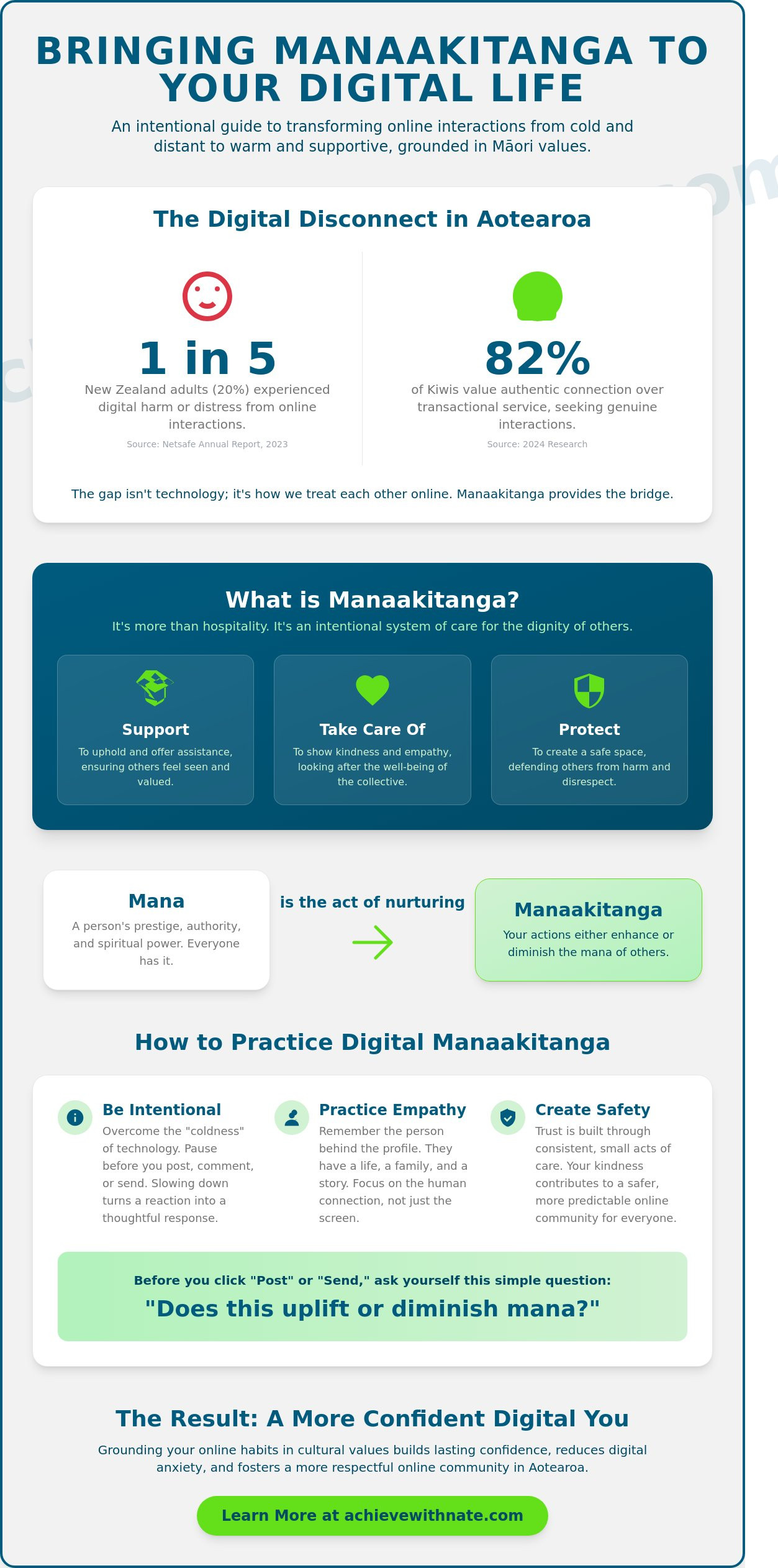
Manaakitanga is the foundation of social connection in New Zealand. While often translated as hospitality, this definition is too narrow. It is not just about being nice or welcoming. The term comes from the root word manaaki, which means to support, take care of, and protect. It is an intentional system of care that ensures the well-being of others.
This value relies on reciprocity. When you extend care to a guest or a stranger, you strengthen the collective. By 2026, as digital interactions become more automated, these Māori cultural values provide a necessary human anchor. Research from 2024 suggests that 82 percent of Kiwis value authentic connection over transactional service. Manaakitanga is the practical application of that preference.
The Vital Connection Between Mana and Manaakitanga
To understand this concept, you must understand mana. Mana refers to prestige, authority, and spiritual power. It is a force that exists in every person and every community. Manaakitanga is the act of nurturing another person’s mana. Your daily actions are never neutral. You either enhance the mana of those around you or you diminish it through neglect or disrespect. Choosing to lift others up creates a sustainable environment for everyone to thrive.
Manaakitanga as a Living Value in Aotearoa
Traditional expressions of this value are most visible on the marae. It is found in the way food is shared and how guests are protected. However, these values translate directly to everyday life for all Kiwis in 2026. It is found in how you listen, how you share space, and how you treat colleagues online. Manaakitanga is a choice you make in every interaction. It requires you to move with purpose and prioritize the person in front of you. This alignment creates a sense of peace that transcends simple manners.
Why Manaakitanga Matters in Our Digital Lives
The internet often feels like a place where mana is easily diminished. We see it in short, sharp comments or the lack of empathy in a heated thread. Without physical presence, our intentionality often fades. This disconnect represents a significant behavioral digital divide. It isn't just about access to high-speed fiber; it's about the gap in how we treat each other once we're logged in. According to Netsafe's 2023 Annual Report, 1 in 5 New Zealand adults experienced digital harm. Bringing manaakitanga into these spaces is vital for your digital wellbeing. When our online actions align with our internal values, we find a sense of peace that doesn't exist in the chaos of constant, reactive scrolling.
Overcoming the "Coldness" of Technology
Screens create a false sense of distance. This "coldness" makes it easier to be unkind because we don't see the immediate impact of our words on a person's face. Practicing manaakitanga changes your physiological response to technology. By choosing to be warm and welcoming, you lower your own stress levels. You stop reacting and start responding. Focus on the human at the other end of the connection. They have a life, a family, and a story just like you do. This shift in perspective turns a stressful interaction into an opportunity for genuine connection.
Building Trust Through Digital Care
Trust isn't built through one grand gesture. It's built through consistent, small acts of digital care. When you choose to be helpful or supportive, you contribute to a safer community for every New Zealander. These intentional digital habits help you show up as your best self. Digital confidence doesn't come from knowing every new app. It starts with feeling good about how you interact with others. If you want to simplify your digital life and focus on what truly matters, you might find more clarity in my approach to intentional living.
Intentionality: Slow down before you hit send.
Empathy: Remember the person behind the profile picture.
Safety: Consistent kindness creates a predictable, secure environment.
Practical Ways to Practice Manaakitanga Online
Manaakitanga is not a passive concept. It is an active choice to extend hospitality and care to others. In a digital space, this looks like intentionality. You can choose to be a source of calm in a noisy environment. Small actions contribute to the collective wellbeing of our online communities. Your digital footprint is more than just data; it is a reflection of how you value people.
Before you click "post" or "send," ask yourself a simple question. Does this uplift or diminish mana? If your words take away from someone's dignity, they do not serve the principle of manaakitanga. This framework of digital hospitality requires you to be present. You cannot be fully present for others if you are constantly distracted by pings and buzzes. Learning how to manage notifications allows you to reclaim your digital peace. When you control your attention, you can offer it more generously to the people who matter.
Manaakitanga in Emails and Messages
Your inbox is a space for connection, not just tasks. Start with a respectful tone to set the foundation. Using appropriate greetings like "Ngā mihi" or "Kia ora" acknowledges the person behind the screen. Writing with clarity and patience is an act of manaakitanga because it removes the burden of interpretation from the recipient. It shows you respect their mental energy.
Promptness is another form of respect. You don't need to be available 24/7, but acknowledging a message shows you value the sender’s time. A simple "I have received this and will get back to you by Wednesday" provides certainty. This small system of communication builds trust and alignment in your professional and personal relationships.
Protecting Mana in Social Media and Comments
Online discussions often become heated. You can disagree with someone without attacking their integrity or mana. Focus on the ideas rather than the individual. This approach maintains the dignity of both parties. If you see someone struggling with technology, offer a helping hand instead of judgment. Digital literacy is a journey that everyone travels at a different pace.
Encourage inclusivity in your group chats and forums. Make sure quiet voices are heard. When you invite others into the conversation, you strengthen the collective. This intentional focus on others is the core of manaakitanga. It creates a sustainable culture of kindness that benefits everyone in the long term.
If you want to build more intentional habits in your digital life, you can join my community for regular insights on simple living.
Building Digital Confidence Through Connection
Technology often feels isolating. It doesn't have to be. When we apply manaakitanga to our digital tools, the focus shifts from hardware to people. You aren't just learning to use an app. You are learning to extend hospitality and care in a virtual space. This perspective changes everything. It moves digital literacy from a chore to a meaningful practice of connection. Digital tools should serve your relationships, not replace them.
Your digital journey is personal. You decide the pace. Many Kiwis feel left behind by rapid tech changes. In 2023, research indicated that digital exclusion affects approximately 20 percent of New Zealanders. This gap isn't about intelligence. It's about confidence. When you feel culturally grounded, the screen becomes less intimidating. You realize you have the agency to navigate this world on your terms. You can design a digital life that aligns with your quiet discipline. This isn't about chasing every new trend. It's about picking the systems that work for you.
The Role of Digital Confidence Coaching
Mastery begins with a single, humble question. It's okay to be a beginner. Through digital confidence coaching, you can bridge the gap between fear and competence. Nate focuses on making systems simple. His mission is to ensure everyday people can use technology to improve their lives. You can learn more about Nate and his intentional approach to teaching. He values clarity over hype. He treats every interaction as an opportunity to build trust and understanding.
Join a Supportive Digital Community
Growth happens best in a safe environment. You don't have to struggle alone. Taking the next step means finding a community that practices manaakitanga. This support system provides the safety needed to experiment and fail without judgment. Digital literacy is a tool for freedom. It allows you to stay connected to whānau and contribute to the world with confidence. If you want to build your skills with a guide who understands your values, fill out an expression of interest. Let's make technology a simple, sustainable part of your well-lived life.
Living with Intent in a Digital World
Practicing manaakitanga online transforms the internet from a source of stress into a space for genuine connection. You've seen how small, intentional shifts in your habits can protect your peace and uplift those around you. By choosing kindness over reactive comments, you build a digital environment that reflects the best values of New Zealand. Digital confidence grows when you prioritize meaningful connection over mindless consumption.
Data from Netsafe in 2023 shows that 1 in 5 New Zealand adults experienced digital harm in the previous year. This statistic highlights why your individual choices are so important. You have the agency to design a digital life that feels sustainable and grounded. Success isn't about mastering every new app; it's about developing simple systems that serve your well-being and long-term focus.
I offer personalized coaching for everyday Kiwis across the country. My approach focuses on intentional, minimalist digital habits that clear the noise and reduce friction. You don't have to navigate these complex spaces alone. National support is available to help you find clarity and alignment in your digital life.
You're capable of creating a focused, purposeful life online. It starts with one intentional choice today.
Frequently Asked Questions
What is the simple meaning of manaakitanga?
Manaakitanga is the practice of showing respect, generosity, and care for others. It comes from the Māori words mana and aki, which mean to uplift the status of those around you. In a simple sense, it's about making people feel welcome and valued. You see this in action at any marae where guests are treated with the highest level of hospitality and care.
How is manaakitanga used in daily life in New Zealand?
You see manaakitanga when a host ensures guests are well-fed or when a neighbor checks on you after a storm. According to the 2021 General Social Survey, 84 percent of New Zealanders felt they could turn to family for help in times of need. This culture of care extends to simple acts like offering a seat on the bus. It's about being intentional with your daily kindness.
Can you practice manaakitanga if you are not Māori?
Yes, anyone living in or visiting Aotearoa can and should practice these values. It's a universal concept that focuses on hospitality and mutual respect. You don't need a specific heritage to be kind or to look after the people in your community. Practicing it helps build a more cohesive and supportive environment for everyone, regardless of their background or where they originated.
What is the difference between whanaungatanga and manaakitanga?
The difference lies in the focus: manaakitanga is about the act of caring, while whanaungatanga is about the relationship itself. Think of whanaungatanga as the social structure or the sense of family connection you build. Manaakitanga is the intentional behavior that maintains that connection. While one creates the bond, the other ensures the bond remains healthy and respectful through consistent, generous actions toward others.
How does manaakitanga improve digital wellbeing?
Practicing manaakitanga online reduces digital friction and creates safer spaces for communication. When you choose to uplift others rather than engage in toxic comments, you protect your own mental peace. Netsafe reported in 2023 that 20 percent of New Zealand adults experienced online harm. Applying these values helps lower that number by fostering a culture of digital respect and intentional, quiet connection.
How can I show manaakitanga in a professional email?
You show it by being clear, respectful, and mindful of the recipient's time. Start with a warm greeting like Kia ora and ensure your tone is helpful rather than demanding. Instead of sending a blunt request, provide the necessary context to make their job easier. This intentional approach builds trust. It shows you value their contribution and their mana within a professional setting.


Comments